By Dave Smith
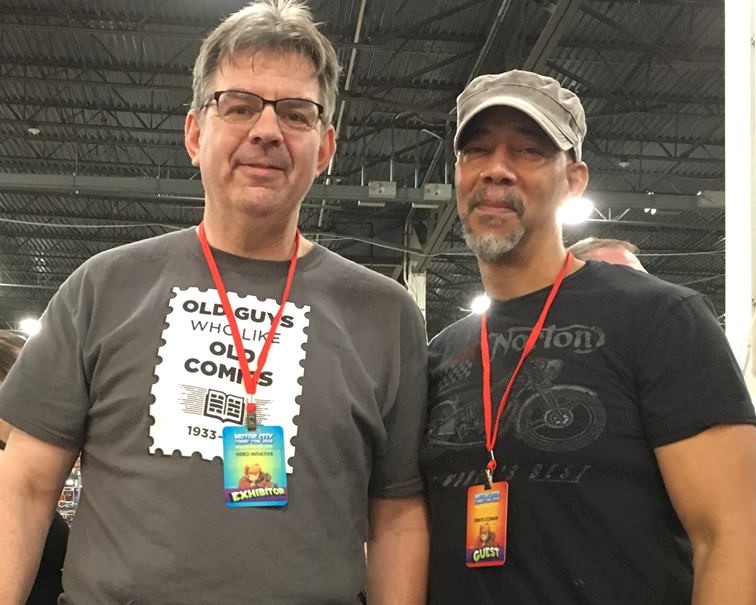
For over forty years, Jim Bosomworth has been deeply embedded in the comic book community. From a high school collector in 1979 to a Navy veteran, comic vendor, and charity volunteer, he has witnessed the hobby’s massive evolution. In this interview, Bosomworth discusses his work with the Hero Initiative, convention history, and modern market trends.
The Interview
Q1: Tell us about Hero Initiative. How many years have you been involved?
Jim Bosomworth: I started donating to Hero Initiative about 15 years ago, and I got a chance to work with them as an active volunteer about 13 years ago. My first time volunteering was with Brian Lan at Wizard World, and since then I have done local shows and traveled to a variety of cities – Akron, Detroit, Memphis, and Dayton – to work at some of their local cons. Hero Initiative’s goal is to raise funds to help comic creators who have fallen on hard times, and I first got involved when I found out that they were helping Steve Gerber during what turned out to be his final months. I most appreciate the fact that the people making the decisions on where to disburse funds are mostly comic pros themselves, like Jim Valentino, Howard Chaykin, and Walt Simonson. They know the struggles because they have seen the struggles.
Q2: Do you remember your first time setting up or attending the Spector Club comic book show? How has it changed?
Jim Bosomworth: My first time setting up at the Spector show was sometime in 1979. I remember because I was in high school and a friend had booked a table, and while I brought several long boxes of books, I only sold about three! I don’t think I ever left the table because my buddy was shopping for most of the time. I only returned as a seller in 1993 after a stint in the Navy, and I worked the shows fairly regularly until about 1997. I always thought the shows were interesting, and there was a decent variety of merchandise as it was a boom time for comics, non-sports trading cards, and toys. Most of the vendors I remember from that time are sadly gone, but there are still a few that I see at every show. Still a good variety of merchandise at the show, and I love that they actively promote local artists and writers.
Q3: What comic book, series, or storyline do you think every fan should read at least once?
Jim Bosomworth: Picking one storyline is tough, but as a Gerber fan I think more people should read the Mad Viking/book burning arc in Man-thing or the Headmen arc in the Defenders. The first is a great illustration of how obsessions with what other people read or listen to can quickly lead to unforeseen tragedy and the second has a character who, while actively trying to take over the world, makes the argument about what good is it to rule the world if it means killing people to do so. Very rare to have a villain openly advocate using non-violent means to take power! Gerber had a way of sneaking in some great social satire and adult ideas while still in the era of the CCA.
Q4: What trends do you see shaping the future of comic book collecting and investing?
Jim Bosomworth: I have been through the 70s, 80s, and 90s implosions, and I wonder if another is on the way. I also wonder how long a company like CGC will have such an outsized impact on the market. I am fine with people who collect only graded books, but I cannot say that I am a fan of CGC’s pricing or its inconsistent grading. I would love to see a company that followed a very straight rubric for grading and that charged the same price for grading a book whether it was Golden, Silver, Bronze, or Modern and whether the book was a .5 or a 9.9. I think that would be a boon to the investment side of the hobby. I am also watching to see how companies will try to sneak in AI and cut back on staff. Will anyone want to invest in comics that were made by machines instead of humans? I won’t. There is already so much computer enhancement and digital art in comics that they are sometimes murky, and I doubt AI will fix that.
Ultimately, Bosomworth reminds us that the heart of comics lies in human imagination, not plastic grading slabs or corporate speculation. His experiences highlight our shared responsibility to protect aging creators through organizations like the Hero Initiative. Amid rising algorithmic trends, his perspective anchors the hobby back to its grassroots values: honoring human storytellers and championing local art.
Visit Jim Bosomworth at the Hero Initiative table at the next Spector Club show, Sunday, October 11, 2026 or visit the Hero Initiative website!
 The Spector Club A History
Leave a comment